Imaging & Diagnostics
Specialized cardiac and vascular testing and imaging to support accurate diagnosis and treatment decisions.
Onsite Testing, Imaging & Diagnostics
Explore our office-based tests and imaging. Select a test to learn what it involves. Call or text our team to confirm availability and preparation instructions.
Treadmill Stress Test
The Peak Heart & Vascular team uses stress testing to assess blood flow through your heart.
Nuclear Stress Test
A nuclear stress test uses a small amount of radioactive tracer and specialized imaging to show how well blood reaches your heart muscle at rest and under stress.
PET/CT
A cardiac PET (Positron Emission Tomography) and CT (Computed Tomography) scan is a non-invasive imaging technique used to assess the health of the heart and surrounding blood vessels.
Calcium Score
A coronary calcium score is a brief CT scan that measures calcified plaque in the heart’s arteries to refine your risk of a future heart attack.
External Monitor
An external heart monitor is a wearable recorder that captures your heart rhythm continuously for days or weeks to catch irregular beats a brief EKG can miss.
Sleep Study
A sleep study records your breathing, oxygen levels, heart rhythm and sleep stages overnight to diagnose sleep apnea and other sleep disorders that strain the heart.
Cardiac Ultrasound
An echocardiogram uses sound waves to create moving images of your heart, showing the size of its chambers, how strongly it pumps and how well its valves open and close.
Vascular Ultrasound
Vascular ultrasound uses sound waves to image the arteries and veins outside the heart, showing narrowing, blockages, clots and aneurysms without needles or radiation.
Ankle-Brachial Index (ABI)
The ankle-brachial index compares blood pressure at your ankle with blood pressure in your arm to screen for peripheral artery disease.
What forms of office testing might I need?
Several types of office testing help inform your diagnosis and treatment plan, such as through the vascular lab to test for circulation problems in the arteries, veins, or both. The doctors at Peak Heart & Vascular recommend the following, depending on your particular symptoms and suspected condition:
Echocardiogram
An echocardiogram uses ultrasound technology (sound waves) to create images of your heart. These images reveal how your heart beats and pumps blood and can identify irregularities or heart disease. Your test looks like a graphic outline that represents the heart’s movement.
Carotid ultrasound
This test uses sound waves to evaluate the arteries in your neck that deliver blood to the brain.
Lower extremity arterial or venous ultrasound
This testing uses ultrasound, noninvasive sound waves, to examine blood flow in the arteries and/or veins of the legs. The arteries carry blood from the heart to your legs and veins return blood from the legs to the heart. Blockages in these areas can put your health at risk.
Ankle brachial index (ABI)
This test compares the blood pressure of your lower and upper limbs. A result of 0.9 or lower indicates possible peripheral artery disease.
Abdominal aortic aneurysm (AAA) screening
An AAA can be a life-threatening bulge in the largest artery in the body. Screening for an AAA takes place with ultrasound and is painless.
Treadmill testing
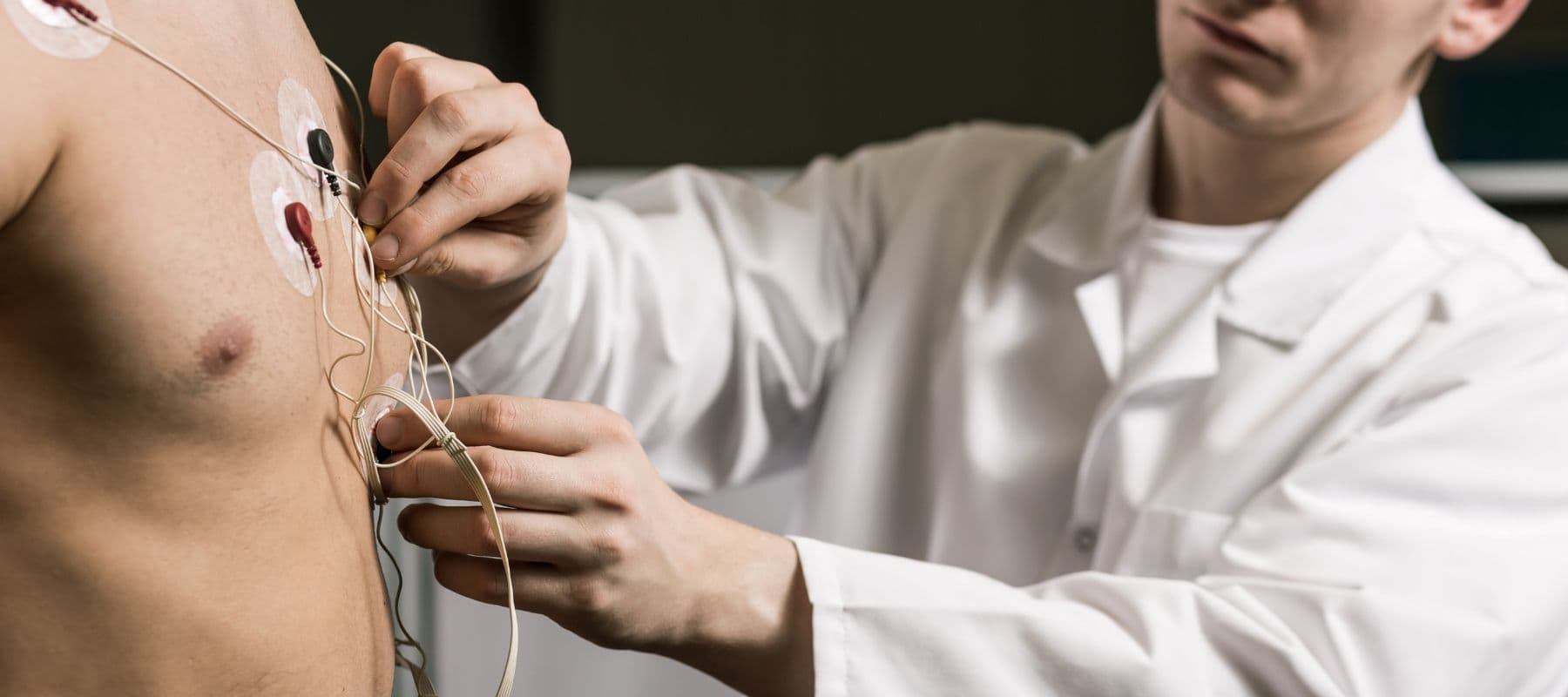
Treadmill testing, or a stress test, helps the doctors of Peak Heart & Vascular understand how your heart handles extra work. During the treadmill test, they hook you up to heart-monitoring equipment as you gradually increase exercise intensity.
Your heart must pump more blood to keep up with the increasing workload, giving your doctor an idea of how well the muscle works. The test can also help your doctor know what kind and intensity of exercise are appropriate for you.
Why would I need office testing to evaluate heart function?
The providers at Peak Heart & Vascular may recommend you undergo cardiovascular office testing if you are at risk for heart disease. Many factors put you at risk for heart disease, including a family history of the disease, smoking, and obesity.
The office tests can detect:
- Heart rhythm disorders
- Reasons why you’re experiencing shortness of breath or chest pain
- Potential problems with the valves or chambers of your heart
- Problems with your heart’s electrical system
- The viability of any implanted device like a pacemaker
- The strength of your heart and it’s ability to tolerate exercise
If you come to Peak Heart & Vascular with symptoms such as heart palpitations or have high cholesterol or high blood pressure, your provider likely orders an echocardiogram. If you have symptoms that suggest circulatory problems, you may undergo one of the advanced ultrasound screening. The information gathered during these tests helps the doctors formulate a treatment plan for your particular situation.
Are office tests painful?
Any of the ultrasound tests, such as an echocardiogram or AAA screening, are painless. The technician passes a transducer or wand across the area requiring examination to deliver sound waves that bounce back and create an image on a computer screen.
Treadmill testing doesn’t hurt, but you might feel slightly uncomfortable and winded.
Peak Heart & Vascular does everything possible to make your office testing experience pleasant and stress-free.
Contact Peak Heart & Vascular to learn more about the office testing you might need to evaluate your heart health and create an effective treatment plan. Call for an appointment or book online.
Frequently Asked Questions
Are these tests painful?
Ultrasound-based tests such as an echocardiogram, carotid ultrasound, or aneurysm screening are painless. Treadmill stress testing does not hurt, though you may feel winded or slightly uncomfortable as the intensity increases.
How do I prepare for a stress test?
Your provider gives you specific instructions in advance. Typically you will be asked not to eat or drink after a certain time, and to avoid caffeine and some medications that could affect the results. If exercise is difficult for you, medication can be used to simulate its effect instead.
Take The Next Step
Your Journey To Better Cardiovascular Health Starts Here
Whether you're experiencing symptoms, managing an existing condition, or taking a proactive approach to your cardiovascular health, our team is here to guide you every step of the way.